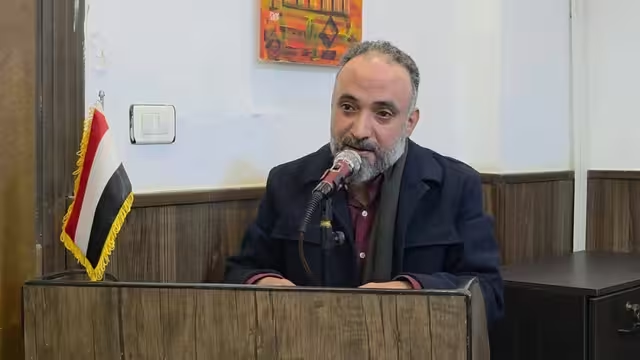
Adel Dashela expert on transitional justice reflects on a trip to Chile in 2025
In this interview, Yemeni researcher Adel Dashela reflects on a visit to Chile in 2025, where he explored how civil society organizations, religious institutions, and families of victims contributed to documenting human rights violations committed during the dictatorship. Drawing on these experiences, he discusses the possibilities and challenges of advancing transitional justice in Yemen.
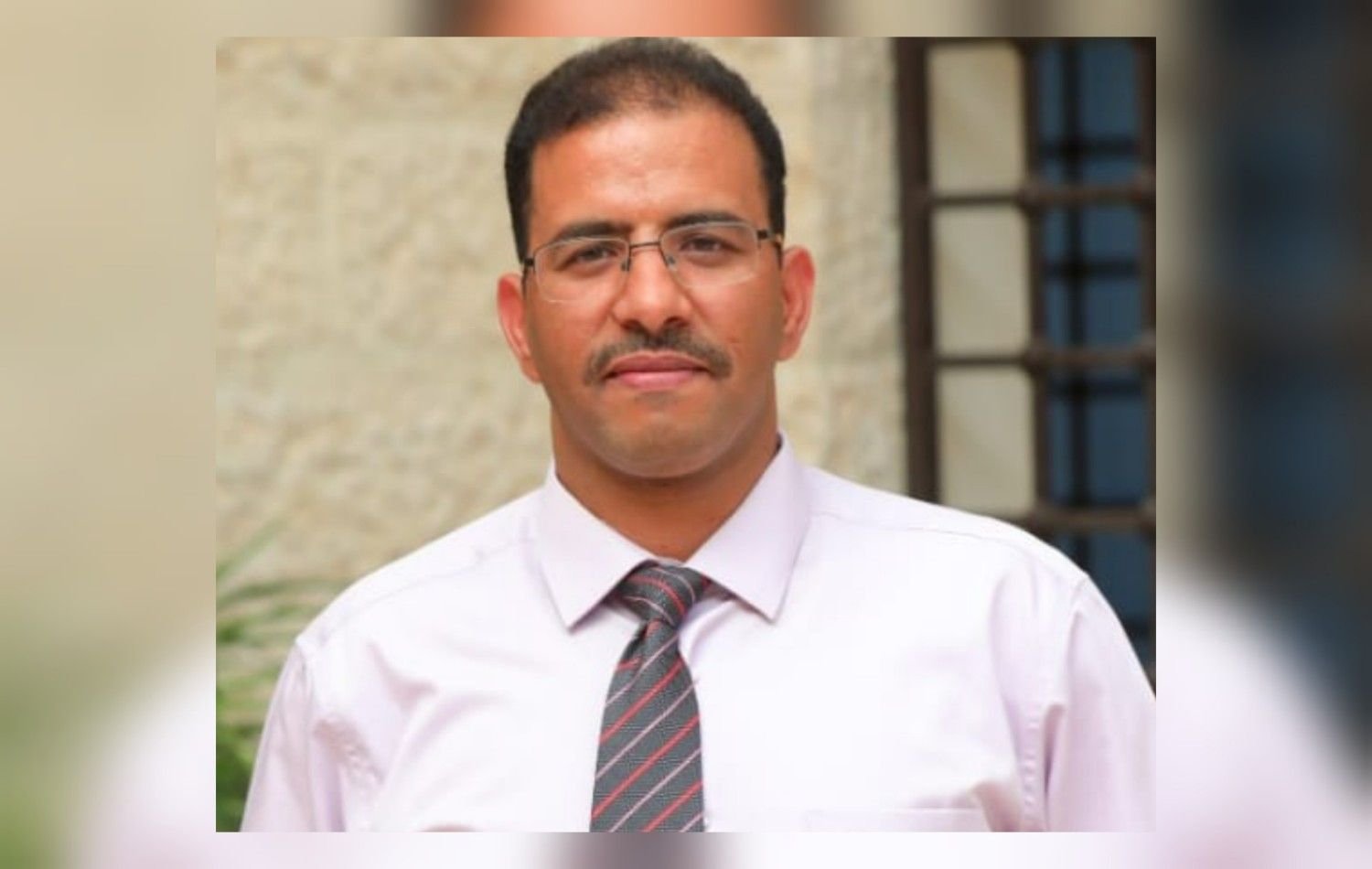
And now, to the interview:
- Marta Mendes: In 2025, you went on a visit to Chile with support from the Columbia Global Center in the capital city of Santiago de Chile¹. The objective was to become better acquainted with Chile’s experience with transitional justice, which, as far as I understand from our interview, did not begin when Augusto Pinochet stepped down as president of Chile in March 1990.
Adel Dashela: Pinochet ruled Chile between 1973 and 1990. After stepping down, there was a noticeable increase in the efforts led by civil society organizations to address the violations committed during the dictatorship. However, I would not say that transitional justice started in 1990. During the dictatorship, actors like the Catholic Church² played a key role in documenting cases of human rights abuses. They continued playing an important role after 1990, particularly due to their archives which provided the backbone for numerous truth-seeking efforts and also reconciliation efforts.
- Marta Mendes: Can you elaborate on the main changes that occurred after 1990? What impact did Chile’s post-Pinochet political transition have for transitional justice?
Adel Dashela: One of the main differences between the pre- and post-1990 period was the political context. After Pinochet stepped down, a center-left coalition of political parties came to power. The parties integrating this coalition were considerably more supportive of transitional justice and of the work led by civil society organizations. Civil society organizations started carrying out extensive efforts to document human rights abuses.
As we know, this would not have been possible during the dictatorship. So after 1990, organizations not only documented in more depth the abuses committed during Pinochet’s era, but documentation efforts also encompassed different types of violations. Let’s take the case of disappearances and missing persons: what I understood from my visit to Chile is that organizations documented cases of missing people, including those who had been killed in secret prisons. Their work was also very important to identify cemeteries and other burial sites in the capital and in other cities and towns across Chile.
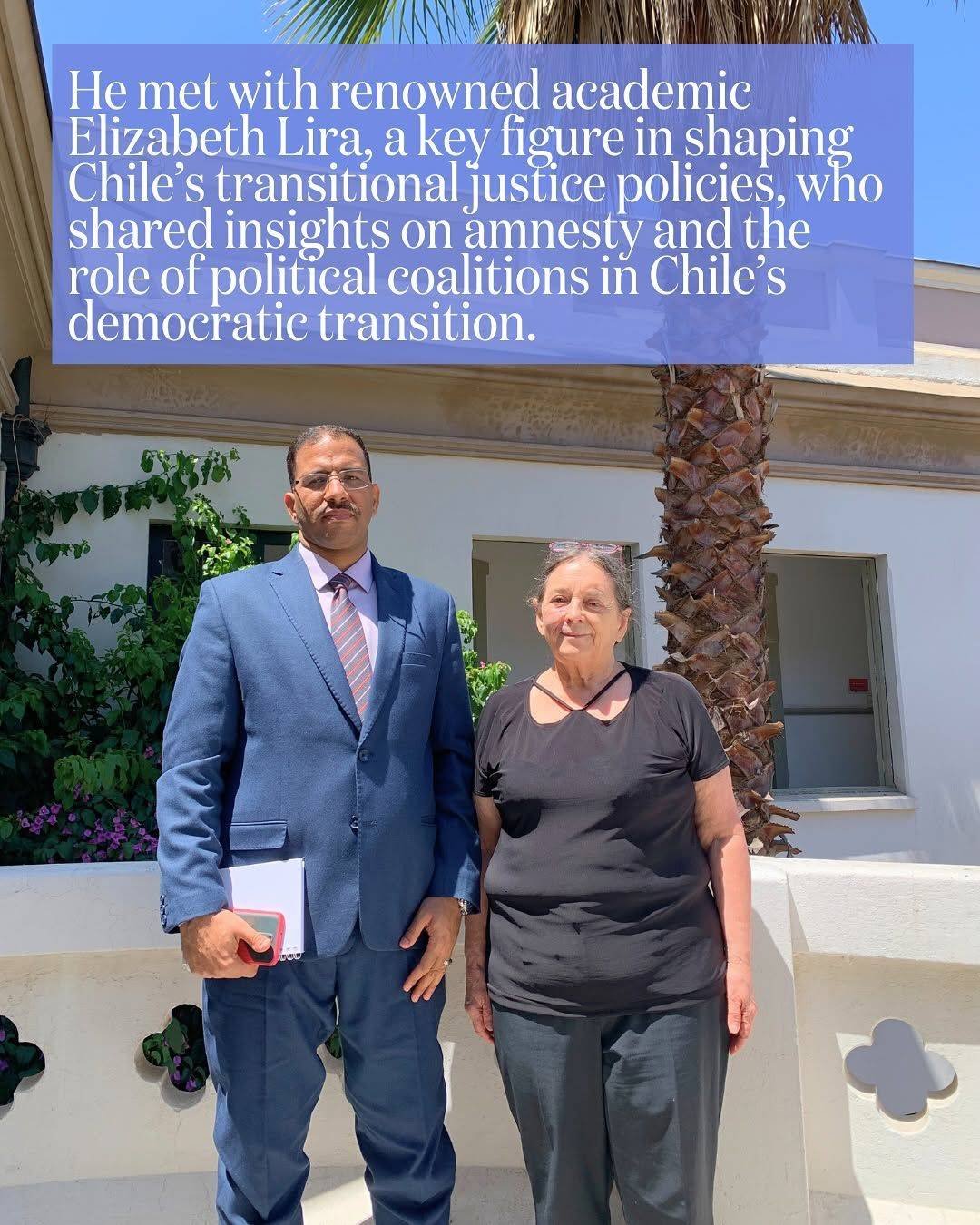
There is another aspect I would like to emphasize. There was a unique relationship between civil society organizations and the families of victims. Many families were not aware of these sites and that their relatives had died in detention. This unique relationship was not limited to disappearances and one can say that in many ways civil society organizations acted as the families’ emotional mandatories, amplifying their voices, and succeeding where others had failed.
What is important to understand is that after 1990 the political circumstances became noticeably more favorable to transitional justice and to the work of civil society organizations. However, this does not mean that there had been no efforts before.
- Marta Mendes: Thirty years forward from the 1990s, should we adapt our perception of the documentation efforts? Were the transitional justice goals that the documentation sought to support achieved? Does the documentation continue to have relevance and for what purposes?
Adel Dashela: Documentation constitutes the backbone of many transitional justice efforts and even if the goals sought are not achieved “right then”, documentation will support them later on when the circumstances are more favorable. In the case of Chile, as I had mentioned, civil society organizations were able to document more than 1,000 cases of missing persons — even if the numbers are probably much higher³. Moreover, only a small portion of these cases has been solved. Families continue to put pressure on state institutions to resolve the remaining cases and in the meantime, there are many memorial sites related to disappearances and also to other human rights abuses. These sites are open for all people to see the crimes committed against people in Chile during the dictatorship. From this perspective, documentation is also important for memorialization, which constitutes an important component of transitional efforts in the country⁴.
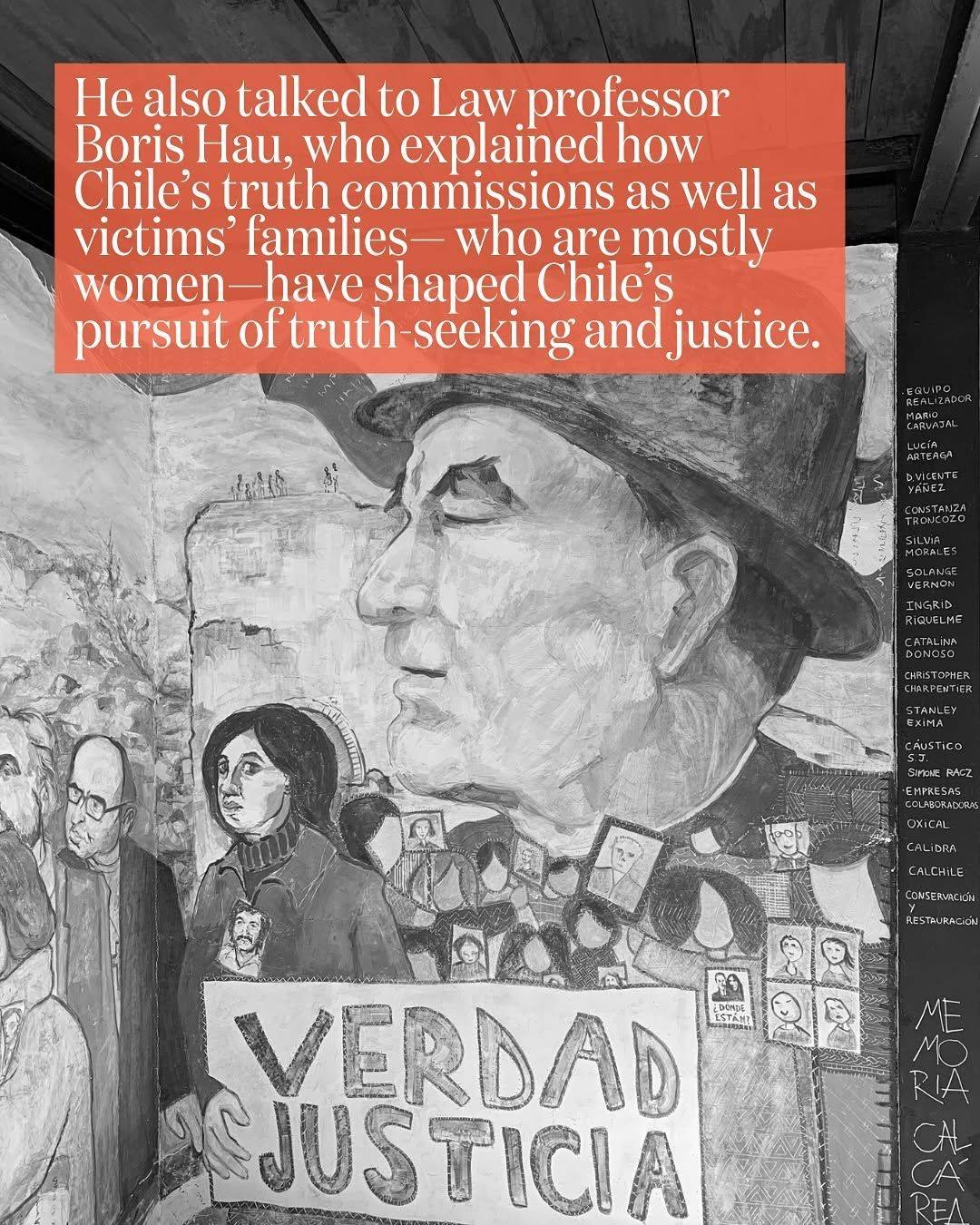
In 2006, during her first presidential term, Michelle Bachelet established the National Day of the Detained Disappeared⁵ and designated August 30 as the official remembrance day in order to coincide with the International Day of the Victims of Enforced Disappearances. Although not related to memorialization, it is also worth mentioning that she also established the National Institute for Human Rights⁶, which functions as the country’s independent human rights monitor.
- Marta Mendes: How important do you think it was that these transitional justice efforts took place in a politically favorable climate? Is it possible for transitional justice to succeed without the support of a country’s main political parties and actors?
Adel Dashela: I think it was very important for organizations from civil society and from other social sectors to have the support of political parties, especially from the 1990s onwards. Those organizations were very active and they played a very important role with regard to the adoption by the country’s political apparatus of a good number of the measures proposed⁷. It is important to retain that the “success” of transitional justice in Chile was however not the result of the work led by one organization or a small group of organizations. As I had mentioned previously, already during the dictatorship, the Catholic Church and other religious actors played a fundamental role in gathering information about the violations and abuses committed — almost 300,000 individual cases were documented! What is remarkable about the Chilean context is how organizations complemented each other, forming a web of interconnectedness and interlocking support. Political parties, youth, students, unions, religious institutions, civil society, families — there was a strong relationship between all of them.
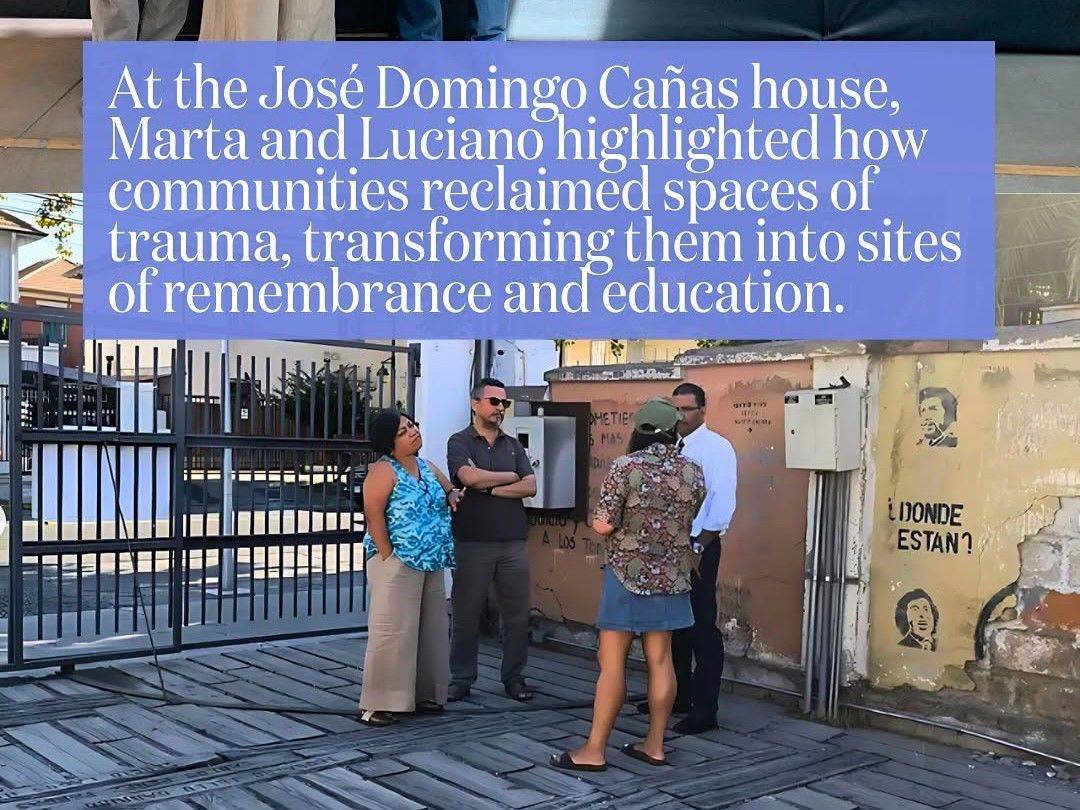
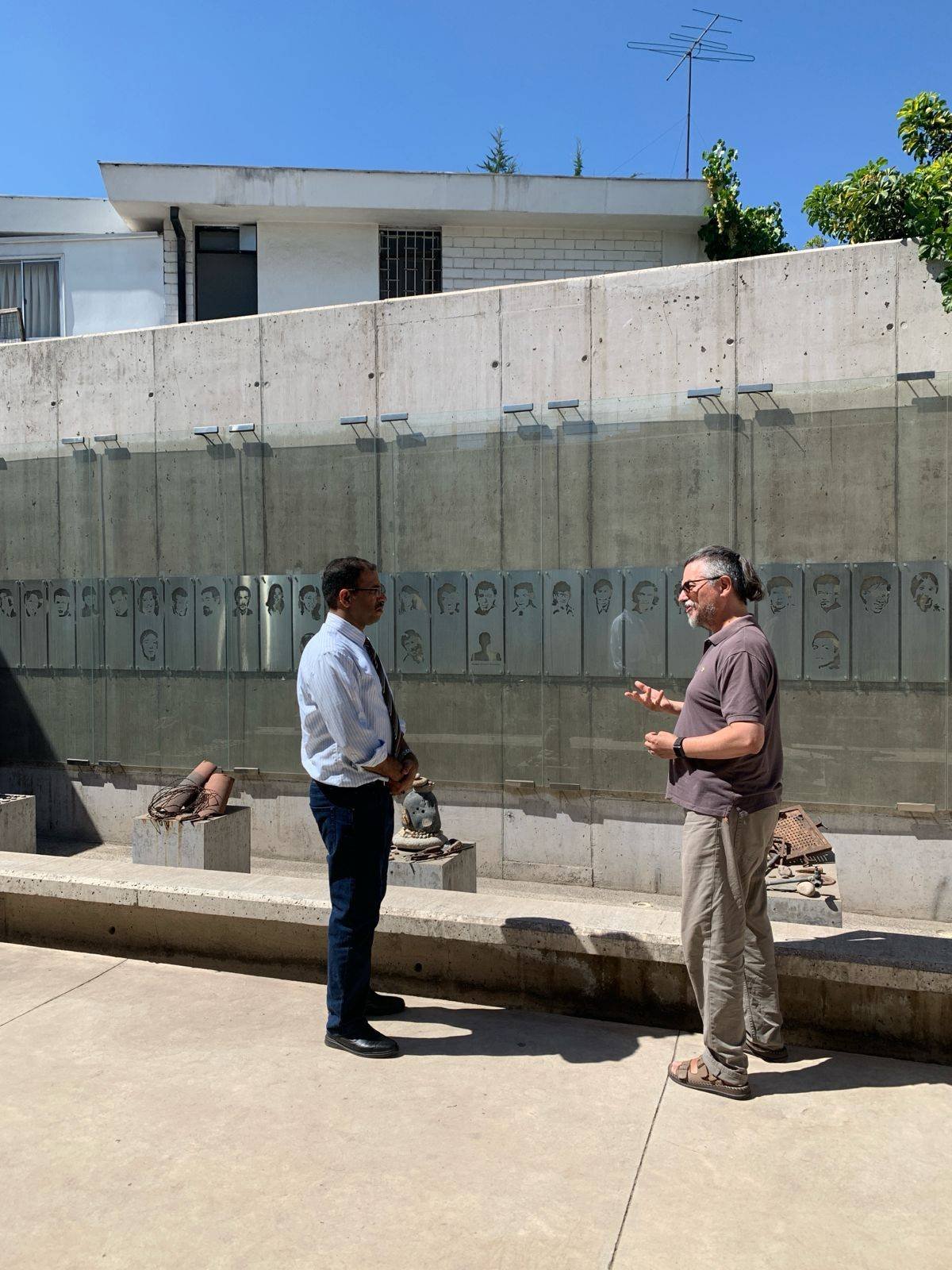
At the “José Domingo Cañas” house
- Marta Mendes: What differences and similarities did you see between the Chilean and the Yemeni context?
Adel Dashela: Similarly to Chile, in Yemen civil society organizations also work closely with the families of the victims, but for instance, in Yemen, CSOs have a different relationship with religious groups. In Chile, I also observed that civil society actors often combined resources to work collectively towards shared goals. In fact, some organizations in Chile reached out to organizations from other countries working on similar issues. One example that comes to mind was that of Addameer⁸, a Palestinian NGO that works to support Palestinian detainees in Israeli and Palestinian prisons.
At the same time, Yemen has many particularities. Many countries with transitional justice experiences have turned to international expertise, but I think that in Yemen, the country prefers a solution that reflects its own culture and prioritizes locally produced knowledge. This includes, although it is not limited to, the role of tribes. Tribes have made significant contributions to conflict-resolution efforts and have helped solve the majority of cases brought up for tribal mediation⁹. In tribal families, victims, like children, like women, marginalised groups are protected by the tribal customary law. Tribes can also provide these groups with some kind of security protection. Yemeni tribal laws and customs remain vastly understudied, yet they have been in place for centuries and for this reason they can and should shape and also strengthen transitional justice.
- Marta Mendes: Finally, another important difference I see from Chile concerns the relationship between political parties and transitional justice. Is it different in Yemen, where throughout our history and the different conflicts that have characterized it, political parties have either played a direct role in violations or have contributed to them? This has many implications for a future peace agreement and we can’t expect parties to be supportive of accountability efforts. However, this does not mean they would not be supportive of other transitional justice measures.
Adel Dashela: Political parties right now are trying to focus on ending the military coup. They want to implement some kind of national reconciliation and this can include restorative justice. So one can address some parts of transitional justice, such as reparations and truth-telling. The latter could include, for instance, efforts to find missing persons. It is also important to address reparations for families, in particular those who have lost their homes and whose family members have died or become seriously injured. When you talk about compensation, this can create space for a discussion about victims’ needs in the framework of a peace agreement or power-sharing agreement, even when there is no agreement on accountability.
Notes and references